
Choosing a rubber supplier involves more than comparing product names such as heavy-duty, oil-resistant or heat-resistant. You need to match the compound, construction, dimensions, test evidence and installation conditions to the actual service, then request quotations that different manufacturers can compare fairly.
Key takeaways
- Match the compound to temperature, chemicals, abrasion, pressure and exposure.
- Specify belt width, length, cover grade, strength, splice and operating conditions.
- Demand traceable test reports for food-grade, oil-resistant and fire-related claims.
- Compare quotations by drawings, tolerances, tooling, testing, lead time and warranty.
What can a Pune rubber manufacturer customise beyond conveyor belts?
A Pune manufacturer can customise far more than conveyor belts: sheets, gaskets, seals, hoses, profiles, pads, liners, roller coverings and molded parts made to your drawing. Choose the form by the job—lining or gasketing, sealing, fluid transfer, impact absorption, vibration isolation, material flow or replacement of an existing component.
1. Use rubber sheets for tank lining, chute lining and fabricated gaskets. Choose cut, molded or spiral-wound gaskets for flanged joints, and static or dynamic seals for stationary or moving interfaces.
2. Specify hydraulic or pneumatic hoses when pressure, bend radius and fluid compatibility matter. Extruded cords, channels, strips and profiles suit continuous seals, edge protection and frame-mounted sections.
3. Select vibration-isolation pads, rubber-to-metal bushes, mounts and bonded components for machinery movement control. Roller coverings and pulley lagging improve grip and protect surfaces; chute liners absorb impact and reduce wear.
4. Ask for molded or extruded parts made to a controlled drawing. A molded seal needs defined flash, parting-line allowance and compression dimensions. An extruded profile needs die control, cut-length limits and corner-joint requirements.
5. Before requesting a price for custom rubber products in Pune, state whether the part replaces an existing component, seals a joint, absorbs impact, isolates vibration or resists a process fluid. Provide dimensions, tolerances, compound, hardness and service conditions; “as per sample” is inadequate without a controlled master sample.
How should you choose a rubber compound for the service conditions?
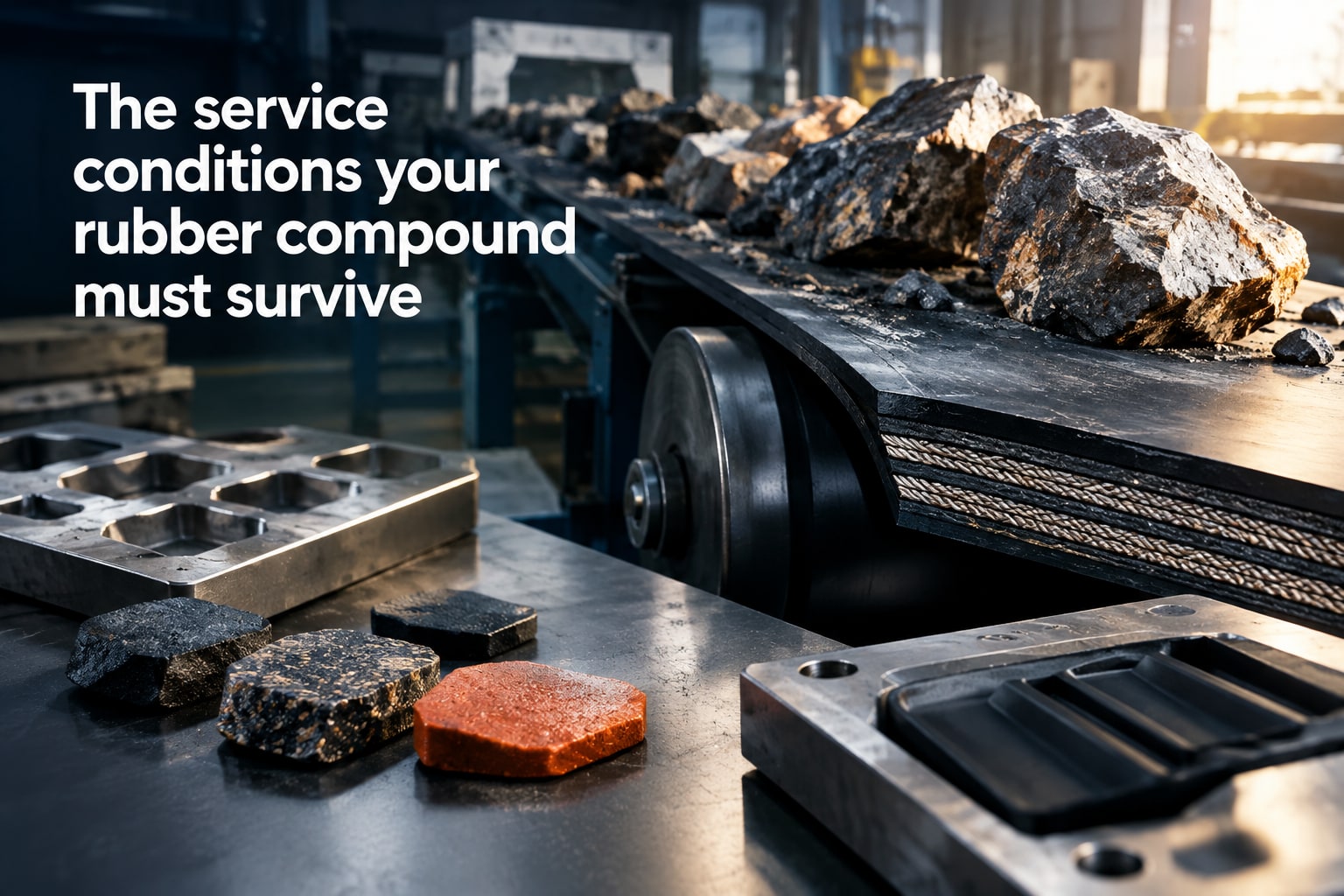
Choose the compound from the exposure map, not from “industrial rubber.” Give an industrial rubber products supplier the actual fluid, concentration, temperature and exposure time before accepting a recommendation for custom rubber products in Pune.
| Exposure | Starting direction | Verify |
|---|---|---|
| Abrasion | Natural-rubber-rich compound | Abrasion, resilience and tear |
| Petroleum oil | NBR for many cases | Actual-oil immersion |
| Vegetable oil | Test the selected grade | Swelling and strength retention |
| Solvents | Solvent-specific grade | Mass and volume change |
| Acids | Concentration-specific grade | Ageing and tensile retention |
| Alkalis | Concentration-specific grade | Ageing and tensile retention |
| Hot water | EPDM | Temperature ageing |
| Steam | EPDM | Steam ageing |
| Ozone | EPDM | Ozone resistance |
| Sunlight and UV | EPDM or UV-stabilised grade | Weathering exposure |
| Flame | Flame-resistant compound | Named flame test |
| Food contact | Food-contact compound | Declaration and migration results |
| Required Shore A hardness | Set target and tolerance | Sealing and dimensional tests |
Harder rubber can resist indentation and wear, but it conforms less effectively to uneven sealing faces. Softer rubber improves conformity, while tear strength, compression set, tensile strength, elongation and abrasion resistance still determine service life; improving one property can reduce another.
These tendencies do not replace immersion and ageing tests using the actual fluid, concentration, temperature and exposure time. Require the compound designation, hardness tolerance, operating temperature range and measured test values; reject “industrial rubber” as a material specification.
How do you specify a conveyor belt for the real application?
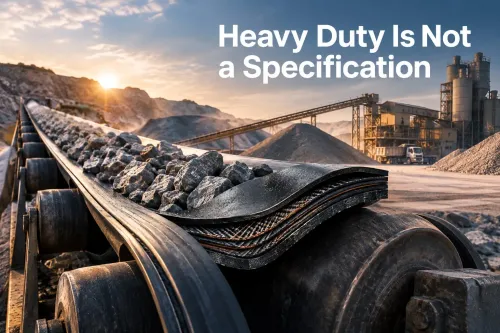
“Heavy-duty” does not specify a belt. Ask for these as separate quotation line items:
- Tensile rating in N/mm
- Carcass construction
- Cover thickness
- Cover grade
- Belt width
- Belt length
- Splice method
The supplier also needs operating tension, material density and size, impact loading, troughing angle, take-up travel, pulley diameters, belt speed, loading method, installation conditions and expected service life. Carcass selection depends on these factors, not belt width alone; an undersized pulley can cause flex-fatigue and splice failure even with a high tensile rating.
| Category | Declared material-temperature band | Demand on the datasheet |
|---|---|---|
| HR | About 100–120°C | Exact continuous and peak limits |
| SHR | About 120–150°C | Exact continuous and peak limits |
| UHR | About 150–180°C | Exact continuous and peak limits |
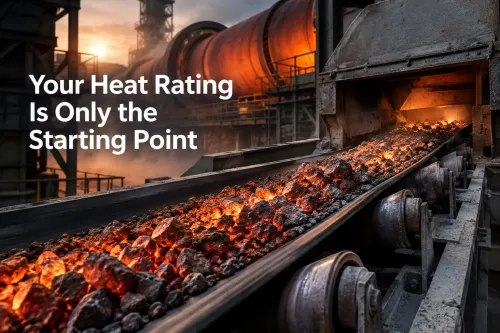
HR, SHR and UHR labels are not universal across rubber products manufacturers in Pune, so obtain the manufacturer’s tested limits. Hot-material resistance does not prove flame-propagation resistance. Specify antistatic, electrically conductive and flame-resistant performance separately, with the required test standard.
Choose a vulcanized splice for cleaner, better flexing operation when proper bias, preparation, pressure, temperature, cure time and geometry are available. Use mechanical fasteners when field repair or limited installation equipment outweighs those benefits.
Poor alignment, pulley buildup, off-centre loading, incorrect troughing and a skewed splice cause tracking, edge damage and premature failure; inspect them before rejecting the belt.
What evidence should you demand for food-grade, oil-resistant and fire-related applications?
Demand process-specific evidence, not a catalogue label. An industrial rubber products supplier should connect each claim to your food, fluid, cleaning or fire exposure.
1. For a food-contact belt, request the applicable declaration of compliance, food-contact test reports and migration-test results. Identify every material and additive, then verify batch traceability from the finished belt to the compound number, production date and inspection record.
Record the cleaning chemicals, washdown temperature, belt-surface temperature limits and sanitation instructions; otherwise a compliant material can still fail during cleaning.
2. Name the oil exposure precisely: mineral oil, diesel, hydraulic oil, cutting fluid, vegetable oil, animal fat, aromatic solvent, ketone or pharmaceutical process fluid. Require the test concentration, temperature and exposure duration in the selection review. Ask whether testing used immersion, splash or vapour exposure, because the same compound can behave differently in each condition.
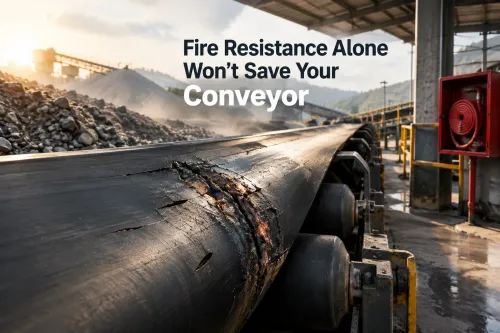
3. Separate heat resistance from flame resistance. If flame propagation matters, request the named flame-test standard and the complete test report, especially for underground or enclosed installations. Antistatic, electrically conductive and flame-resistant are separate requirements.
ISO 14890 covers rubber- or plastic-covered belts for general surface use. It does not fully specify food contact, underground fire performance, oil resistance or unusually high-temperature service, so demand additional evidence for those applications.
What must a custom rubber quotation and drawing contain?
A quotation is controllable only when it is tied to a controlled drawing or approved master sample, not a verbal description.
1. Send a drawing showing overall dimensions, tolerances, formed and trimmed dimensions, flash limits, parting-line allowance, inspection datums, inserts, surface finish, and the selected ISO 3302-1 tolerance class for molded or extruded rubber. State whether each dimension is formed, trimmed, or controlled by an insert.
2. Define the material by compound designation, Shore A hardness and tolerance, compression set, tensile strength, elongation, tear strength, abrasion resistance, fluid compatibility, and operating temperature wherever these affect service life. Shore A alone cannot qualify a roller, liner, gasket, seal, or profile.
3. For rubber-to-metal parts, specify the metal grade, degreasing and surface preparation, blast profile, primer, adhesive system, bond-failure criterion, and destructive-test evidence. A rubber layer pressed onto steel is not a defined bonding system.
4. Request a representative certificate identifying the tested lot, compound or batch number, cure or production date, test method, specimen direction, measured value, acceptance limit, test date, and rework status. “As per sample” is inadequate without a controlled master sample because shrinkage and tolerances remain disputed.
Traceability also prevents visually identical compounds from being confused when their oil, heat, or abrasion performance differs. This checklist applies when comparing custom rubber products in Pune.
How can you compare rubber products manufacturers in Pune before placing an order?
Send each rubber products manufacturers in Pune candidate the same approved drawing, controlled sample and service data. Ask for a line-by-line quotation, not a catalogue description.
| Criterion | Compare in every quotation |
|---|---|
| Compound and hardness | Compound designation, Shore A hardness and tolerance |
| Belt construction | Tensile rating in N/mm, carcass, cover thickness, cover grade, width, length and splice method |
| Part dimensions | Formed and trimmed dimensions, tolerances, inserts and inspection datums |
| Evidence and delivery | Lot-traceable test certificates, lead time, installation support and warranty exclusions |
Reject “heavy-duty belt” or “oil-resistant rubber” as the complete specification. Those labels do not identify tensile capacity, fluid compatibility, temperature limits or expected service life.
Check whether an industrial rubber products supplier can make all required forms when one project includes sheets, gaskets, seals, hoses, profiles, pads, molded parts and bonded components.
Elcon Elastomers Pvt Ltd belongs in the same comparison when you need customised conveyor belts or related industrial rubber components; assess its offer against identical drawing control, traceability, test-certificate and service-condition criteria.
Use this request template: “Quote from drawing or sample; dimensions and tolerances; hardness; compound; operating temperature; load; speed; belt width and length; pulley diameter; joint type; installation conditions; target service life.” For custom rubber products in Pune, add ISO 3302-1 tolerance class where molded or extruded dimensions affect fit.
Related products
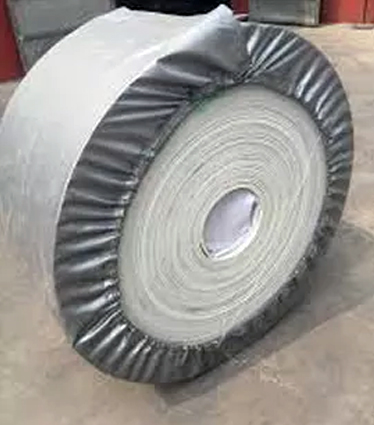 | Food Grade Conveyor Belts We are Manufacturer, Supplier and Exporter of Food Grade Conveyor Belts and our setup is situated in Sahakar Nagar, Pune, Maharashtra, India. View product → |
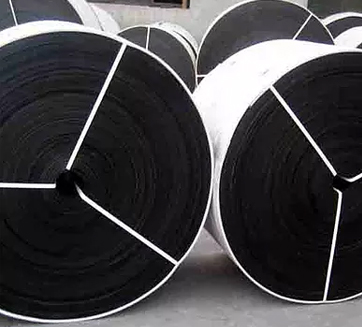 | Oil Resistant Conveyor Belts Oil Resistant Conveyor Belts are manufactured using oil resistant synthetic rubber. These belts can be customized based on client specifications. View product → |
Frequently asked questions
What can rubber manufacturers in Pune customise beyond conveyor belts?
They can produce sheets, gaskets, seals, hoses, profiles, pads, liners, roller coverings and molded parts to your drawing or sample.
How should you choose a rubber compound for service conditions?
Match the compound to operating temperature, chemical exposure, abrasion, pressure, weathering, oil contact and required hardness. Confirm the choice against the actual duty cycle.
How do you specify a conveyor belt for the real application?
Provide material type, throughput, belt width and length, speed, inclination, temperature, lump size, loading method, pulley diameters, belt strength, cover grade and splice requirements.
What evidence should you demand for food-grade, oil-resistant and fire-related applications?
Request the exact compliance or test document, product grade, batch traceability, test method, test date and scope. Check that the evidence covers the compound and intended use.
What must a custom rubber quotation and drawing contain?
Require compound and hardness, dimensions, tolerances, reinforcement, surface finish, inserts, tooling charges, quantities, testing, packaging, delivery schedule, revision number and acceptance criteria.
Related products
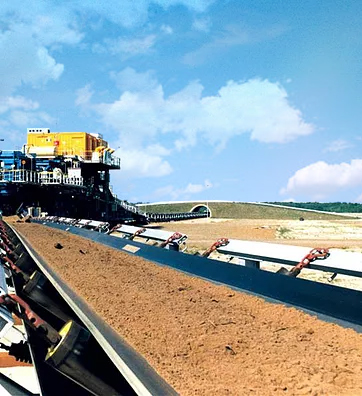 | Heavy Duty Conveyor Belts We also offer Heavy Duty Conveyor Belts to our customers. They are manufactured using quality materials which provide durability and strength to the... View product → |
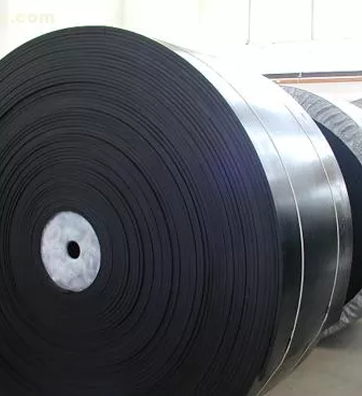 | General Purpose Conveyor Belts General Purpose Conveyor Belts General purpose belts we provide are precisely fabricated by our trained professionals using finest quality materials and sophisticated techniques. View product → |
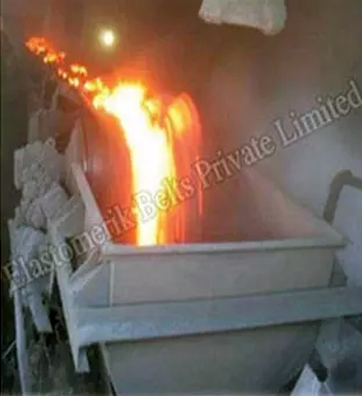 | Fire Resistant Conveyor Belts We hold expertise in offering Fire Resistant Conveyor Belts that are manufactured using the latest technology and provide optimum performance. View product → |
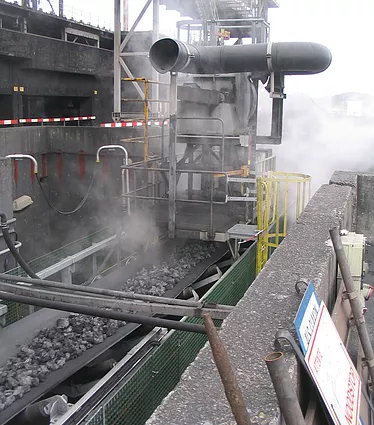 | Heat Resistant Conveyor Belts We manufacture Heat Resistant (HR), Super heat resistant (SHR), and Ultra heat resistant (UHR) conveyor belts. View product → |