
A Pune conveyor-belt quotation is not comparable until width, thickness, tensile rating, carcass, cover compound, joining method and delivery scope match. By the end, you will have a method to compare fire-resistant and general-purpose belts, check the evidence behind an FR claim, and identify the lower-cost option that still suits your hazard and operating conditions.
Key takeaways
- Compare belt quotes by width, thickness, carcass and cover grade.
- Request fire-test reports, batch traceability and the belt’s exact standard.
- Choose FR belts near ignition hazards, not for every material-handling line.
- Ask Pune suppliers for a complete specification and warranty before comparing prices.
Why a Pune belt quotation cannot be judged by ₹/metre alone
A quotation showing only ₹/metre cannot establish the rubber conveyor belt price in Pune. A 1,000 mm belt with 3+2 mm construction contains far less rubber and reinforcement than an 8+3 mm belt, so the two prices are not comparable.
Before comparing offers, hold these details constant:
- Width, overall thickness, belt length and tensile rating
- Textile or steel-cord carcass construction
- Cover grade, cover thickness and edge type
- Open length or endless belt requirement
- Mechanical fastener or hot-vulcanised joining method
- Freight to site, unloading, installation and splicing charges
| Unit quoted | What it includes | How to compare |
|---|---|---|
| Per metre | A specified belt length, often without joining | Multiply by required length, then add freight, splice and installation |
| Per roll | A fixed roll length with possible cutting waste | Check actual usable length, roll weight, transport and storage costs |
| Per square metre | Belt area calculated from width and length | Verify thickness, carcass, cover grade and whether edges are included |
| Complete conveyor assembly | Belt plus pulleys, structure, drive and installation | Separate the belt value from equipment and commissioning costs |
For a fire resistant comparison, request the price and technical specification on the same basis as the general-purpose offer. Ask whether the quote includes ISO 340 testing, electrically conductive performance, freight, unloading and hot-vulcanised jointing; otherwise a cheaper ₹/metre figure can become the higher installed cost.
How to compare fire-resistant and general-purpose belts on equal specifications
The fire-resistance premium is meaningful only when width, length, thickness, strength, construction and joining method match. Compare a 1,000 mm, 8+3 mm belt with another 1,000 mm, 8+3 mm belt—not with a thinner or shorter alternative.
| Specification | Keep identical in both quotes |
|---|---|
| Width and length | For example, 1,000 mm wide and 100 m long |
| Overall thickness | State cover and carcass thickness separately, such as 8+3 mm |
| Tensile rating | Use the same N/mm rating and safety factor |
| Carcass construction | Match textile plies, fabric type, or steel-cord construction |
| Cover grade | Keep abrasion, oil, heat and other requested performance grades the same |
| Edge construction | Compare cut-edge with cut-edge or moulded-edge with moulded-edge |
| Jointing method | Compare supplied lengths, mechanical fasteners, or hot-vulcanised endless belts on the same basis |
| Pulley and loading conditions | Use the same minimum pulley diameter, trough angle and conveyed load |
Then isolate the intended difference: one belt has documented flame resistance and the other does not. Ask whether the fire-resistant option was tested to ISO 340; “FR” alone is not a comparable technical specification.
Use ISO 14890 as a reference when evaluating general purpose conveyor belts in Pune, while confirming any Indian, DIN, EN or proprietary grade claimed. The same method applies to fire resistant conveyor belts in Pune. Convert both offers to a common ₹/metre basis, and exclude installation or hot-vulcanised splicing unless both quotations include it.
What “fire resistant” means—and which documents prove it
A belt marked “FR” has not proved all three properties. Flame resistance or flame retardance concerns how the belt behaves after ignition; ISO 340 is the key flame-propagation test. Antistatic performance is electrical, not fire performance: ISO 284 sets a maximum surface resistance of 3.0 × 10^8 ohms.
Heat resistance concerns continuous contact with hot material and requires separate selection.
| Property | Evidence to request | What it does not prove |
|---|---|---|
| Flame resistance | ISO 340 test method, result, and certificate naming the belt construction | Suitability for hot clinker, sinter, coke, or foundry discharge |
| Antistatic performance | ISO 284 result showing surface resistance at or below 3.0 × 10^8 ohms | Flame resistance or safe temperature service |
| Heat resistance | ISO 4195 result or the purchaser’s specified temperature rating | Flame propagation performance under ISO 340 |
For fire resistant conveyor belts in Pune, request these documents before comparing quotations:
- A test report or certificate that identifies the manufacturer, belt type, carcass, cover compound, test standard, result, and issue date.
- Written confirmation that the supplied belt is both flame-resistant and electrically conductive when your site requires both properties.
- An ISO 4195 result or declared operating-temperature limit for hot materials.
- An abrasion result, such as ISO 4649, because flame resistance does not predict wear from stone, coal, coke, or ore.
- A statement linking the evidence to the quoted belt, not merely to a similar product family.
When the FR premium is justified and when general purpose is safer economically
A fire-resistant belt earns its premium where a belt fire could spread through combustible material, enclosed galleries, or occupied work areas. Typical triggers include underground coal conveyors, coal-handling plants, conveyors carrying combustible dust, and transfer points exposed to hot particles or ignition sources.
| Conveyor condition | Appropriate belt | Why the choice matters |
|---|---|---|
| Underground coal or combustible dust in an enclosed route | Flame-resistant belt tested to ISO 340 | A burning belt can spread fire along the conveyor and release hazardous smoke |
| Flammable material near hot work, furnaces, or ignition sources | Flame-resistant belt, with heat resistance specified separately | ISO 340 does not prove resistance to continuous high temperature |
| Dry sand, stone, gravel, ore, or packaged nonflammable goods in an open plant | General-purpose belt | There is no fire-spread hazard to justify the FR compound |
| Ordinary indoor transfer where oil, heat, and static are controlled | General-purpose belt | You avoid FR cost and possible compromises in abrasion or flexibility |
A general-purpose belt is the safer economic choice only after you check tensile rating, cover thickness, abrasion grade, troughability, pulley diameter, loading impact, and belt speed. “General purpose” is not a complete specification.
For general purpose conveyor belts in Pune, compare those requirements with an equivalent FR construction, not a thinner or lower-tensile belt. In a rubber conveyor belt price in Pune fire resistant comparison, include expected replacement intervals: altered FR compounds can affect abrasion, low-temperature flexibility, adhesion, and heat ageing.
Choose FR when one prevented fire outweighs its purchase premium; otherwise, buy the correctly specified general-purpose belt.
What to request from Pune suppliers before accepting the lowest quote
Do not approve the lowest ₹/metre offer until every quote uses the same belt basis: width, overall thickness, length, tensile rating, carcass, cover grade, edge type and joining method. Ask rubber products manufacturers in Pune to identify whether the price covers a roll, cut length or endless belt.
- Technical file: belt data sheet, carcass construction, cover-compound properties, dimensional tolerances, minimum pulley diameter and troughing limits.
- Fire-resistant evidence: ISO 340 test method, result, certificate scope and the belt construction tested; do not accept “FR” or “flameproof” alone.
- General-purpose reference: stated conformity to ISO 14890, an Indian, DIN or EN grade, or a measurable proprietary specification.
- Commercial terms: freight to your Pune site, unloading, GST, packing, delivery date, minimum order length and any charge for imported reinforcement.
- Jointing scope: splice type, endless length, hot-vulcanized jointing price, installation labour and travel charges shown as separate lines.
- Supplier records: manufacturer name, batch or lot number, test report, inspection record and warranty linked to stated load, speed, temperature and operating conditions.
| Compare in the quote | Ask the supplier to state | Why it matters |
|---|---|---|
| Belt supply | Roll, cut length or endless belt | Prevents unlike unit prices |
| Reinforcement | Textile or steel-cord carcass and tensile rating | Changes strength, pulley demand and cost |
| Delivery | Freight, unloading and promised dispatch date | Exposes the lowest landed cost |
| Warranty | Coverage period and exclusions | Connects quality claims to actual use |
Elcon Elastomers Pvt Ltd should be asked for the same evidence and line-item pricing as every competing supplier, so a local reputation does not replace measurable acceptance criteria. A thicker or stronger belt also needs a pulley-diameter and take-up check before purchase.
Related products
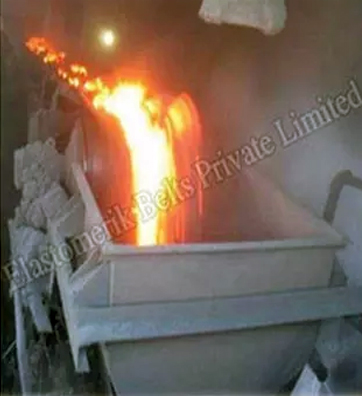 | Fire Resistant Conveyor Belts We hold expertise in offering Fire Resistant Conveyor Belts that are manufactured using the latest technology and provide optimum performance. View product → |
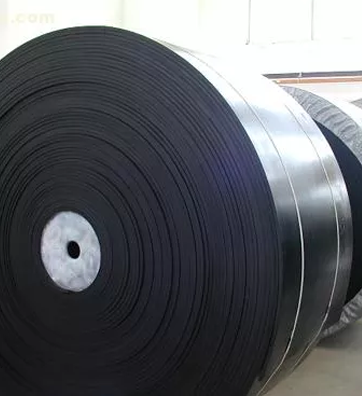 | General Purpose Conveyor Belts General Purpose Conveyor Belts General purpose belts we provide are precisely fabricated by our trained professionals using finest quality materials and sophisticated techniques. View product → |
Frequently asked questions
Why cannot you compare conveyor belt prices by ₹/metre alone?
Width, overall thickness, top and bottom cover thickness, carcass construction, tensile rating, belt length and rubber grade all affect the price per metre.
How do fire-resistant and general-purpose belts differ?
Fire-resistant belts use compounds and constructions tested for flame propagation and related safety performance, while general-purpose belts target ordinary material handling without that fire-performance requirement.
What documents prove that a conveyor belt is fire resistant?
Request the product datasheet, the stated test standard, an accredited laboratory test report, batch or lot identification and a certificate linking the supplied belt to those results.
When is the fire-resistant premium justified?
Choose fire-resistant belts where combustible dust, hot material, underground operation, enclosed transfer points or ignition sources create a credible fire risk.
What should you request from a Pune conveyor-belt supplier?
Request a line-item quotation, technical datasheet, belt construction, test documents, delivery terms, warranty, splice guidance, inspection records and the manufacturer’s legal details.