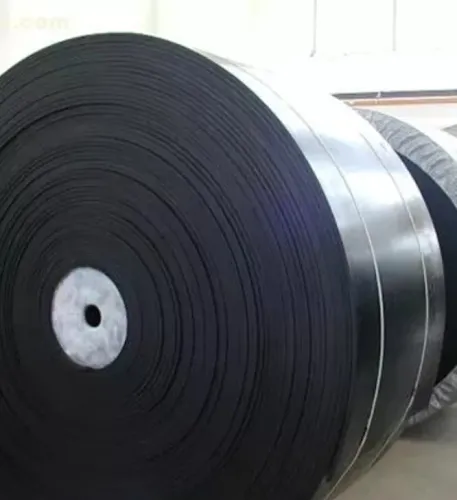

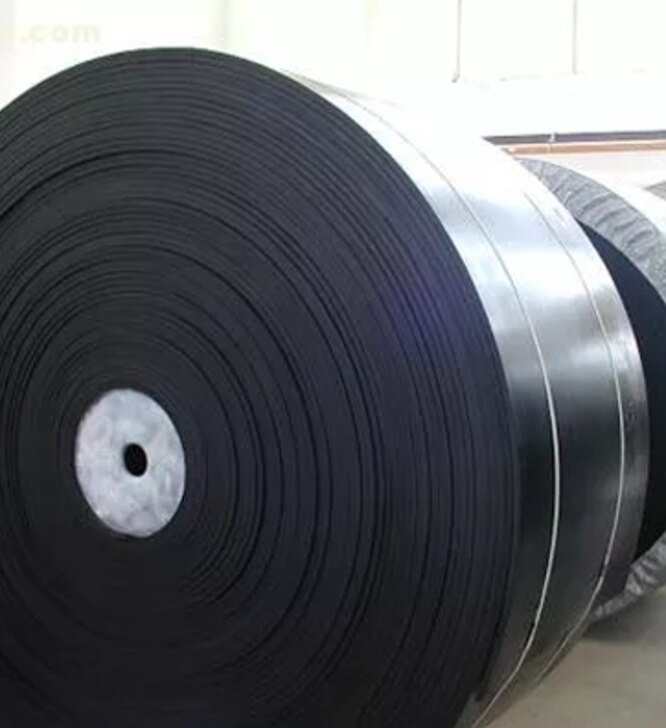
A coal conveyor at a power plant, a limestone line at a cement works and an aggregate conveyor at a quarry do not face the same loading, temperature, abrasion or safety demands. By the end, you will be able to classify your facility, define the conveyor duty, compare belt construction and supplier support, and request a technically complete quotation.
Key takeaways
- Match belt cover and construction to the material, temperature and impact load.
- Calculate tonnes per hour before selecting belt width and tensile rating.
- Specify belt, splice, pulley, cleaner and inspection requirements in one document.
- Compare suppliers by local service response, spare parts and total downtime risk.
Match the belt requirement to the Pune facility
Coal-fired and captive power plants need different belts for coal feed, ash removal and stockyard movement. Cement works handle limestone, clinker and hot dust; stone crushers and quarries handle sharp, abrasive aggregate; ports unload variable coal, ore, sand and grain; steel plants move ore, coke and hot material; warehouses carry packaged goods.
Facility duty, not a generic product label, should drive the specification.
| Facility and material | What to assess | Specification direction |
|---|---|---|
| Coal-fired or captive plant: coal, ash | Fine-to-lump size, bulk density, moisture, oil exposure, drop height and temperature | Fire-resistant, antistatic coal belt; abrasion and heat selection for ash |
| Cement works: limestone, clinker | Sharpness, abrasiveness, temperature and impact at chutes | Heavy abrasion-resistant cover; heat-rated belt for hot clinker |
| Crusher or quarry: aggregate, stone | Large sharp lumps, high drop height and severe impact | Heavy-duty carcass, thick abrasion cover, impact bed or impact idlers |
| Port: coal, ore, sand | Changing moisture, density, vessel unloading rate and contamination | Specify for wet fines, abrasive ore and sustained loading |
| Steel plant: ore, coke, hot material | Temperature, lump sharpness, oil exposure and impact | Heat, abrasion or oil-resistant construction according to the stream |
| Warehouse: packaged goods | Low impact, clean dry loads, belt speed and tracking | General-purpose belt for cartons and unit loads |
General purpose conveyor belt applications include low-impact transfers, stockyard movement, ordinary dry bulk and packaged goods. Do not use one for hot or burning material, highly abrasive sharp rock, wet fines that plug skirts, or oil-contaminated loads; these conditions attack covers, splices or carcasses.
Ask conveyor belt companies for power and bulk handling in Pune to match every belt to the material history, not merely its width.
Understand every part of the bulk-handling conveyor
Inspect the complete route before selecting or replacing a bulk material handling conveyor belt. Start at the tail pulley and loading chute: check chute geometry, loading alignment and drop height before examining the impact zone, impact bed or impact idlers, and skirtboards.
| Fault | Result | Check |
|---|---|---|
| Alignment error | Edge damage and mistracking | Square pulleys, frames and idler stations |
| Seized or dirty idler | Belt abrasion and tracking drift | Spin each idler; remove buildup |
| Off-centre loading | Uneven wear and spillage | Centre the stream before impact |
| Wrong skirt clearance or poor chute geometry | Cut edges and trapped fines | Set sealing without pinching the belt |
| Misaligned splice | Repeated mistracking | Inspect joint squareness and profile |
Continue over the carrying idlers, return idlers, drive pulley, take-up and cleaners to the discharge point. Check pulley lagging, take-up travel, scraper contact and emergency pull-cords; a belt replacement cannot correct a crooked structure, contaminated idler or badly aimed chute.
For monsoon operation, inspect these before ordering:
- Clear drainage beneath transfers and around return runs.
- Seal chutes without forcing wet fines beneath the skirtboards.
- Check wet-fines buildup on return idlers and pulleys.
- Confirm return-belt cleaners remove material before it reaches the drive pulley.
- Match pulley lagging to the belt cover and wet operating condition.
- Recheck tracking after rain; contamination can turn a previously stable belt into an edge-cutting belt.
Calculate capacity before choosing width and tensile rating
Give the supplier operating data, not a request for a belt by width alone. A bulk material handling conveyor belt’s width and rated strength in kN/m do not establish suitability without belt mass, friction, drive arrangement, starting torque, take-up travel, splice efficiency and transient starting tension.
Provide:
- Capacity in tonnes per hour and material bulk density.
- Belt speed, belt width and trough angle.
- Incline, vertical lift and conveyor length.
- Particle size, lump sharpness and loading profile.
- Drop height at each transfer point.
- Operating hours per day and expected start-stop frequency.
- Moisture condition, including wet fines, drainage and seasonal changes.
Compare the duty before choosing between general-purpose conveyor belt applications and heavier construction.
| Option | Capacity, speed and trough | Impact, loading and operating hours | Construction choice |
|---|---|---|---|
| General-purpose | Ordinary capacity, moderate speed and standard trough angle | Low transfer impact, occasional loading and shorter duty | Standard carcass and covers for dry, non-oily material |
| Heavy-duty | Higher capacity, faster running or deeper trough loading | Large drop height, frequent loading, high impact and long operating hours | Impact bed or impact idlers, plus thicker abrasion-resistant covers |
Choose impact beds where heavy lumps strike between closely spaced supports; choose impact idlers where the transfer needs rolling support and easier maintenance. Thicker abrasion-resistant covers justify their cost for sharp aggregate, ore or repeated impact, but they add belt mass and can increase starting demand. Recheck the belt-and-splice calculation after every change.
Build a power-plant belt specification that can be checked
A quotation from a power plant conveyor belt supplier must include a belt-and-splice calculation, not only a nominal strength certificate. Require the submittal to identify:
- Carcass type, tensile strength in kN/m, number of plies and troughability.
- Cover grade, cover thickness, edge construction and minimum pulley diameters.
- Operating-temperature limits, take-up travel and the proposed splice design.
| Option | Surface and repair | Pulley, scraper and tension implications |
|---|---|---|
| Vulcanized splice | Smooth, factory-like surface; longer repair time | Works with closer pulley and scraper arrangements; suited to high-tension service when correctly designed |
| Mechanical fasteners | Faster field repair; raised joint surface | Needs compatible pulley diameter and scraper clearance; fasteners can catch cleaners and may not suit high-tension belts |
For coal or another combustible load, request documented compliance with the plant specification for fire resistance and electrostatic control, with test evidence commonly tied to ISO 340 and ISO 284 or the adopted Indian equivalent. A fire-resistant cover does not replace fire detection, belt-alignment monitoring, slip protection or suppression systems.
For hot ash, clinker or hot particles, reject the vague phrase “heat resistant” as a specification. Ask for peak interface temperature, exposure time, and separate continuous-duty and intermittent-duty limits; a belt that survives warm coal can fail under sustained hot clinker. Confirm those limits against the actual loading and shutdown conditions.
Compare Pune suppliers on uptime, service and total risk
A cheaper belt is not cheaper if a failed splice stops coal, ash or aggregate handling for a shift. Compare conveyor belt companies in Pune by recovery time and documented fit, not quotation price alone.
| Check | Ask for | Risk exposed |
|---|---|---|
| Belt and splice | Selection calculation covering carcass, kN/m, covers, splice design, pulley diameters, temperature limits and take-up travel | Premature splice or belt failure |
| Replacement supply | Matching rolls, identification records and lead time | Wrong belt or extended outage |
| Emergency service | Local splicing team, site equipment, technician qualifications and written response time | Delayed recovery |
| Joint acceptance | Inspection procedure, measurements, photographs and sign-off | Hidden splice defects |
| Existing conveyor | Compatibility with cleaners, idlers, pulleys and fasteners | Mistracking and component damage |
Before awarding the order, ask how outdoor rolls are protected from direct sunlight, ozone, standing water, mud and heat sources. Require supports that prevent prolonged deformation and a rotation schedule for extended storage; cracked covers, damaged edges or distorted carcasses can arrive before installation.
Use a commissioning checklist: tracking under empty and loaded conditions, loading-centre alignment, cleaner pressure, drainage, pulley contamination, and available take-up travel. Elcon Elastomers Pvt Ltd belongs in the same comparison, with evidence tested against these criteria rather than accepted on reputation.
The best conveyor belt companies for power and bulk handling in Pune prove documented suitability and recovery support. Width, nominal tensile strength or a fire-resistant label alone cannot establish total risk.
Related products
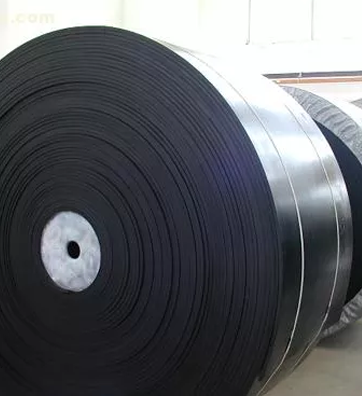 | General Purpose Conveyor Belts General Purpose Conveyor Belts General purpose belts we provide are precisely fabricated by our trained professionals using finest quality materials and sophisticated techniques. View product → |
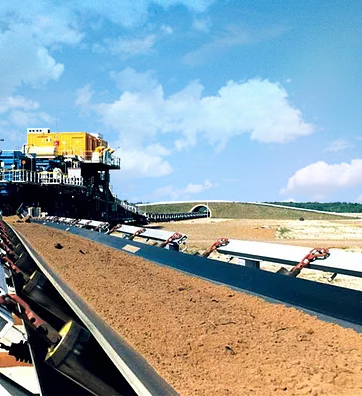 | Heavy Duty Conveyor Belts We also offer Heavy Duty Conveyor Belts to our customers. They are manufactured using quality materials which provide durability and strength to the... View product → |
Frequently asked questions
How do you match a conveyor belt to a Pune facility?
Start with the material, throughput, lump size, temperature, moisture, impact and route. Coal, ash, limestone, clinker, aggregate, ore and packaged goods require different belt constructions and covers.
What parts make up a bulk material handling conveyor?
Review the belt, drive pulley, tail pulley, idlers, take-up, loading chute, skirt seals, cleaners, splice and discharge arrangement as one system.
How do you calculate conveyor capacity before choosing belt width?
Use the required tonnes per hour, bulk density, belt speed, trough angle, surcharge angle and material lump size. Then check the selected width against loading, spillage and tensile requirements.
How should you compare power plant conveyor belt suppliers in Pune?
Check technical documentation, splice support, inspection capability, replacement availability, response time and the supplier’s ability to reduce downtime across the belt’s service life.
Related products
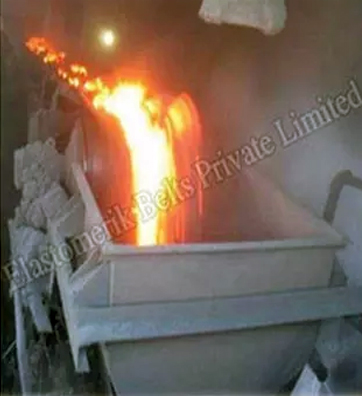 | Fire Resistant Conveyor Belts We hold expertise in offering Fire Resistant Conveyor Belts that are manufactured using the latest technology and provide optimum performance. View product → |
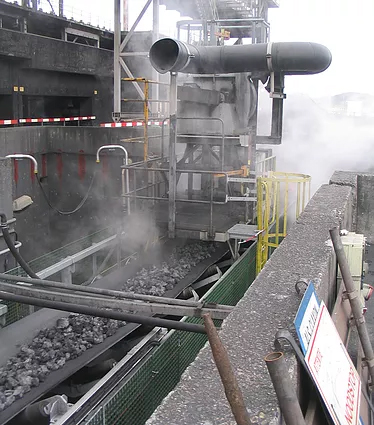 | Heat Resistant Conveyor Belts We manufacture Heat Resistant (HR), Super heat resistant (SHR), and Ultra heat resistant (UHR) conveyor belts. View product → |