
A belt can meet a food-contact requirement and still fail when its splice, cleaning chemicals, temperature range or conveyor frame is wrong for the process. By the end, you will be able to request credible compliance documents, match the belt to your product and sanitation regime, specify the installation correctly and verify the finished conveyor before production.
Key takeaways
- Verify food-contact evidence against your product and sanitation process.
- Match belt construction to oils, moisture, heat and cleaning chemicals.
- Specify pulleys, frames, transfers and access—not only the belt.
- Require installation checks, cleaning instructions and validation records at handover.
What “food grade” must cover before you approve a belt
Approve a belt for direct food contact only when its evidence matches your product and sanitation process. “Food grade” describes intended food-contact materials; it does not certify the complete conveyor, installation or cleaning outcome.
- Request a Declaration of Compliance naming the regulation or standard used, belt construction, intended food types, operating temperature range, cleaning chemicals and use conditions.
- Obtain the material composition and migration or extractives test report for the contact layer, carcass, coatings, adhesives and splice materials. U.S. 21 CFR 177.2600 addresses extractives from rubber articles used repeatedly with food; it is not blanket approval for every rubber belt or its other layers.
- Check batch traceability, manufacturer identification and the declared limits against your actual process. A generic “food grade” certificate proves too little.
- Confirm resistance to oils, fats, acids, abrasive solids, steam, caustic cleaners, sanitizers and wash-water temperature. Food grade belts for food processing still require chemical-compatibility evidence; food-contact compliance alone does not prove cleaning resistance.
- Evaluate every part that could touch food or residues: splice, edges, pulley lagging, fasteners, coatings and lubricants. Approve the belt as a system, then validate the installed conveyor’s cleanability, transfer points and splice after cleaning.
Installation in Pune does not create regulatory compliance. Record the approval documents and the post-cleaning trial before production starts.
Match the belt construction to the food and cleaning regime
An oily product can swell the wrong belt, while acidic fruit can attack its surface. Specify the product, temperature at the belt, and sanitation cycle together; a food-contact declaration does not prove resistance to your caustic wash, acid rinse, sanitizer, steam, or hot water.
| Product or regime | Belt construction to investigate | Main failure to prevent |
|---|---|---|
| Dry powders and abrasive solids | Polyurethane or reinforced PVC with a durable, cleanable top cover | Surface wear creates cracks that retain powder |
| Oils, fats, meat, or dairy | Oil-resistant polyurethane, thermoplastic elastomer, or a rubber construction supported by chemical data | Swelling, softening, and loss of tracking |
| Sticky dough or wet produce | Non-porous polyurethane or thermoplastic elastomer with a suitable surface texture | Product buildup in deep profiles |
| Acidic ingredients | Material with documented resistance to the specific acid and concentration | Discolouration, embrittlement, or surface attack |
| Frozen or hot product | Construction rated for the product temperature and every cleaning temperature | Cracking from thermal shock |
| Caustic wash, acid rinse, or sanitizer | Belt, splice, covers, and lubricants checked against the actual chemical and concentration | A belt survives while its splice or coating fails |
Ask for continuous and peak operating temperatures, water temperature, chemical names, concentrations, contact time, and cleaning frequency. Hygienic conveyor belts in Pune must also suit the plant’s humidity, drainage, washdown pressure, and maintenance access. Correct the conveyor’s traps and inaccessible roller ends too; changing only the belt does not create a hygienic system.
Specify the conveyor, not just the belt
Reliable, cleanable operation depends on the belt dimensions and the conveyor geometry around it. Specify belt width, thickness, overall length, splice type, minimum pulley diameter, operating speed and load; a belt that is too wide, tight or thick will track poorly, stretch the splice or overload the drive.
| Specification | What to define | Failure prevented |
|---|---|---|
| Belt width and tracking | Product width, edge clearance, crowned or grooved pulley, and tracking method | Product spills, edge damage and belt wandering |
| Thickness, length and splice | Belt gauge, centre-to-centre length, endless finger splice or mechanical fastener, and tension range | A raised joint becomes a product trap or fails during washdown |
| Pulleys and rollers | Minimum pulley diameter, roller pitch, accessible roller ends and sealed bearings | Excessive flexing, inaccessible residue and water retention |
| Frame and transfers | Open, inspectable joints; no exposed threads; tight transfer gaps without dead plates or hollow sections | Flour, meat or wet product collects where cleaning tools cannot reach |
| Washdown layout | Hose reach, drainage slope, drain capacity, wash frequency, ambient heat and humidity, and maintenance clearance | Standing water, corrosion and delayed sanitation |
Tell the installer whether the line receives daily foam cleaning, high-pressure water or intermittent wipe-downs. Select lubricants, pulley lagging, fasteners and covers as parts of the contact system, then confirm that every surface can dry after cleaning.
Leave access to the splice, underside, roller ends and transfer points. Replacing a non-food belt without correcting those areas preserves the hygiene failure. Local Pune conditions affect drainage, drying and maintenance; they do not by themselves establish food-contact suitability.
What professional installation adds for Pune processors
A belt that tracks when empty can wander once product, washdown water and drive tension change. Professional food grade conveyor belt installation in Pune should therefore end with measured results, recorded settings and a loaded trial—not simply a belt fitted to the frame.
- Measure conveyor length, belt width, pulley diameters, shaft alignment, transfer gaps, take-up travel, incline angle and available access for cleaning and maintenance.
- Confirm product load, belt speed, operating temperature, washdown water temperature, cleaning frequency, drainage, humidity and exposure to oils, acids, caustic cleaners or sanitizers.
- Calculate belt length and set tension using the belt supplier’s installation method. Over-tension loads shafts, bearings and the belt; under-tension causes drive slip, mistracking and poor transfers.
- Inspect pulley lagging, crowned faces, bearings, scrapers, guides and take-up movement before fitting the belt. Correct alignment problems rather than forcing the belt to compensate.
- Install and record the splice, or document the endless belt’s identification and orientation. Photograph the splice and transfer points before handover.
- Run the conveyor empty and under representative load, then check tracking, speed, belt tension, transfers, edge clearance and abnormal noise.
- Repeat the trial after cleaning and record the result, belt identification, splice details, settings, defects, corrective work and maintenance instructions.
For food grade conveyor belts with installation in Pune, request a Declaration of Compliance naming the regulation, construction, food types, temperature range, chemicals and use conditions. Elcon Elastomers Pvt Ltd should be asked for the same evidence as other food grade conveyor belt suppliers in Pune.
Installation does not validate your sanitation procedure; your team must inspect the cleaned splice and transfer points.
Related product
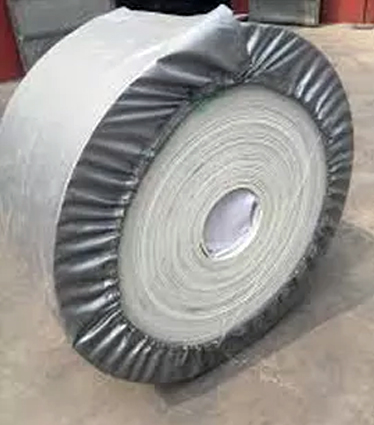 | Food Grade Conveyor Belts We are Manufacturer, Supplier and Exporter of Food Grade Conveyor Belts and our setup is situated in Sahakar Nagar, Pune, Maharashtra, India. View product → |
Build cleaning, inspection and validation into the handover
A food-contact declaration covers identified materials, not the complete conveyor. At handover, verify that the installed belt, splice, transfer areas, pulley lagging, fasteners, lubricants and coatings do not create an uncleanable product-contact path.
Use this handover checklist:
- Obtain the belt manufacturer’s cleaning limits for detergent concentration, water temperature, pressure, contact time and approved tools. Exceeding them can swell the belt, loosen the splice or damage the cover.
- Remove dry product before wet cleaning, then wash with the specified detergent. Do not use sharp scrapers, abrasive pads or uncontrolled high-pressure jets that can cut the cover or drive soil into joints.
- Rinse completely and allow the belt and conveyor to drain and dry. Trapped wash water inside hollow sections or under frame joints can support microbial growth.
- Inspect the splice after cleaning. Look for a raised edge, open finger, loose fastener, exposed reinforcement or moisture-retaining gap.
- Inspect transfer points, roller ends and frame joints for product ledges and inaccessible surfaces. A new belt cannot correct these conveyor defects.
- Run a documented trial after cleaning under normal load and speed. Record visual results and, where your sanitation programme uses them, ATP or microbiological swab results.
Release the conveyor only after the processor accepts the cleaning method and inspection record. Repeat validation after belt tension changes, splice repair, conveyor modification or a change in chemical, temperature or product.
Frequently asked questions
What must food-grade approval cover before you approve a conveyor belt?
Check evidence for the belt’s intended food contact, then match it to your product and sanitation process. Food grade does not certify the complete conveyor, installation or cleaning outcome.
How do you choose food-grade belts for different processing conditions?
Match the belt construction to the food and cleaning regime, including exposure to oils, moisture, heat, detergents and mechanical loads.
What should you specify besides the belt?
Specify the full conveyor: pulleys, frame materials, transfer points, belt tracking, guards, access for cleaning and the operating conditions.
What does professional food grade conveyor belt installation in Pune add?
Professional installation verifies alignment, tension, tracking, splice quality and hygienic access, then records cleaning, inspection and validation requirements at handover.